
Many people are choosing to eat gluten-free for health reasons. Those with celiac disease are unable to effectively process gluten – the protein in grains. Others may be gluten-sensitive, producing similar symptoms such as bloating, diarrhea, constipation, or abdominal pain after consuming foods containing gluten.
Where do you get gluten in your food? The main place you get it is in wheat flour. Gluten is found in traditional breads such as rolls, buns, bagels, biscuits, and flour tortillas; baked goods like cake, cookies, donuts, muffins, pies, waffles, and pancakes; pasta such as spaghetti, fettuccine, lasagna, ravioli, and macaroni; many cereals such as Wheaties, Cheerios, and Raisin Bran; snacks including pretzels, crackers, and some chips; beer; gravies; breading; and soups (used for thickening.)
Following a gluten-free diet has become much more popular these days, thus many more options exist for those following it. The health benefits include better digestion, less bloating and abdominal pain, and some people report improvement in joint pain, headaches, and even depression. Those with autoimmune conditions often feel better avoiding gluten as well.
The quality of wheat produced in the United States is different than in European countries. Many people report that consuming pasta, bread, and other wheat-containing items while traveling in Europe does not produce the same GI symptoms that they get when consuming wheat in the states. Wheat in the US is higher in gluten because we produce primarily red wheat vs white wheat that’s produced in Europe. But, unfortunately, one of the other big problems with U.S. wheat is glyphosate, an herbicide found most in Roundup, that is sprayed on our wheat. This has been banned in Europe and many other countries. Its use has been linked to irritable bowel syndrome, celiac disease, colitis, cancer, heart disease, ADHD, and many other diseases.
But back to desserts! What are some ways to make gluten-free desserts? For baking purposes, we use Bob’s Red Mill Gluten Free flour that can be substituted 1:1 in most recipes. Other great brands include King Arthur and Pamela’s. Many companies are now making dessert mixes, but when you use these, you are unable to control the sugar content. The internet is your best friend when it comes to searching online for great recipe ideas. One site we like is www.nutritioninthekitch.com/gluten-free-desserts.
One go-to GF dessert recipe we love is Avocado Chocolate Mousse, as well as rice puddings, chia seed puddings, and baked goods made with almond flour. Other GF desserts we love to make are apple crisp using GF oatmeal and flour, panna cotta, chocolate mousse, flourless chocolate cake, flan, ice cream, sorbet, and crème brulee. We reduce the sugar in most recipes by a third to a half.
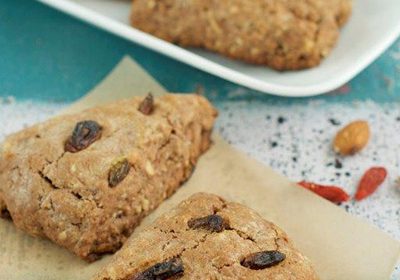
Almond flour is a great gluten-free, high-protein alternative to regular flour. It has more nutritional bang for the buck and works well in baked goods but is much denser. Our friend from Illinois, Diane Ehling, who runs a wonderful natural medicine practice with her husband Kurt, shared this scone recipe with us: 2 cups almond flour, ¾ tsp baking soda, ¼ tsp fine sea salt, 1/3 cup mini dark chocolate chips (or raisins with cinnamon or blueberries with lemon zest), 1 jumbo egg, lightly beaten, ½ tsp vanilla extract, and 1 Tbsp raw honey (or up to 3 T if you like them sweeter). Preheat oven to 350. Blend dry ingredients together. Mix wet ingredients into the dry with a spoon, then use your hands to ensure dough is uniform. Press dough into a one-inch-thick disc. Cut into 8 same-size “pie” pieces. Place onto parchment paper-lined baking sheet and bake for 10-12 minutes. Cool for at least 5 minutes. Try one of the different variations. These are so tasty!
Don’t be afraid to try making GF desserts. There are endless delicious possibilities!